

Commentary
Central Asia’s digital ambitions are achievable, but only if policy is aligned with the region’s physical constraints.
Aruzhan Meirkhanova
{
  "authors": [
    "Georgy Trishkin"
  ],
  "type": "commentary",
  "blog": "Carnegie Politika",
  "centerAffiliationAll": "",
  "centers": [
    "Carnegie Endowment for International Peace",
    "Carnegie Russia Eurasia Center"
  ],
  "englishNewsletterAll": "",
  "nonEnglishNewsletterAll": "",
  "primaryCenter": "Carnegie Russia Eurasia Center",
  "programAffiliation": "",
  "regions": [
    "Russia"
  ],
  "topics": [
    "Technology",
    "Global Governance"
  ]
}
Source: Getty
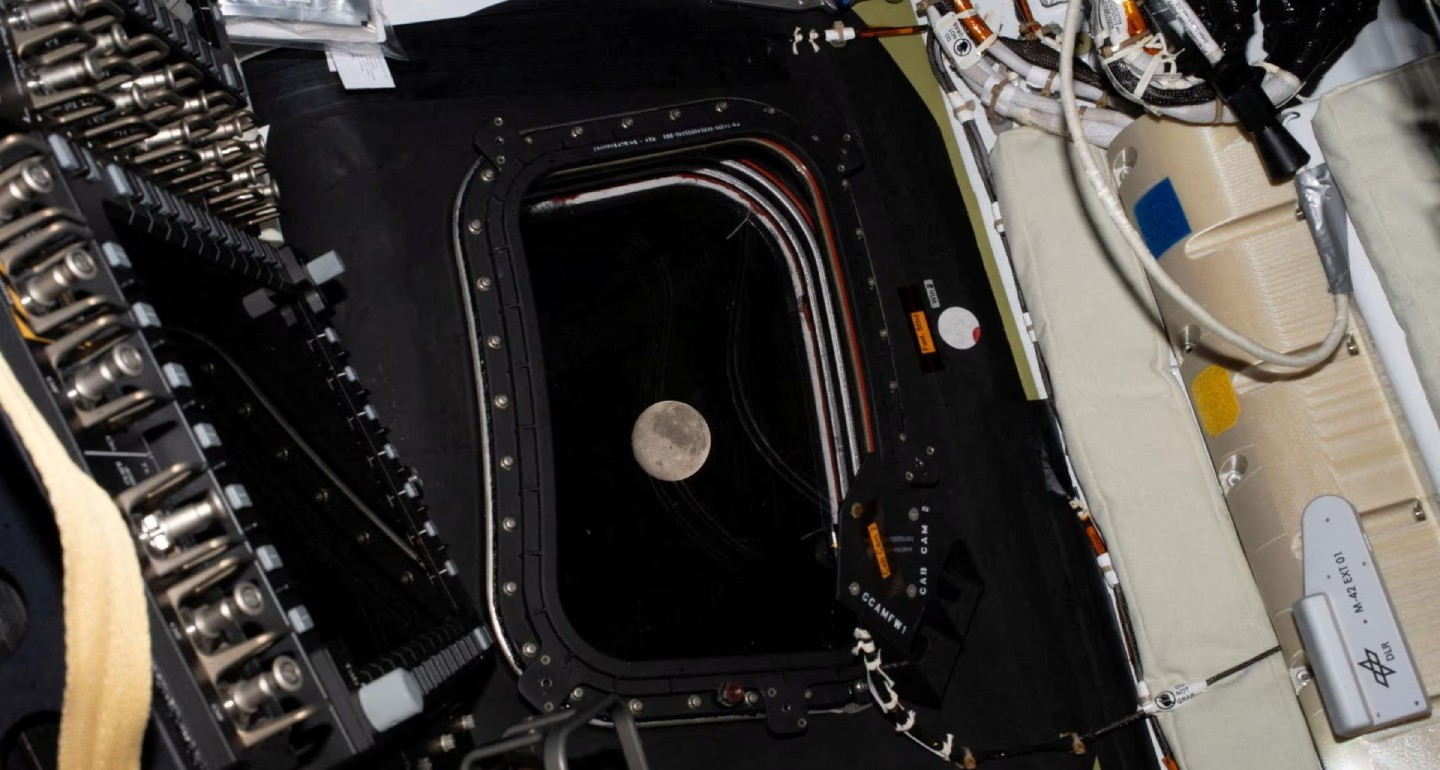
Despite having the resources and expertise, the Russian space industry missed the opportunity to offer the United States or China a mutually rewarding partnership in the lunar race.
As the United States and China compete for supremacy in the second lunar race, with plans for humans to return to the moon by the end of 2028, the prospect of Russian cosmonauts taking part in those programs looks doubtful. Russia has not lost interest in the moon, but its own space industry is stagnating and underfunded.
The United States’ successful Artemis II mission has once again confirmed that lunar exploration remains a key symbol of national pride. On April 1, a Space Launch System super heavy-lift rocket carrying four astronauts on board the Orion spacecraft launched from Cape Canaveral to perform a lunar flyby. A subsequent mission, Artemis IV, is due to land on the moon toward the end of 2028.
The Apollo missions back in the 1960s were a breakthrough, but they didn’t herald the dawn of lunar exploration. On the contrary, they demonstrated the sheer volume of expertise and resources required. Even the relatively simple task of landing lightweight probes on the moon’s surface has yet to be accomplished by most national space agencies and emerging private companies.
In the twenty-first century, lunar exploration has become an even more tempting prospect, with the discovery of traces of water ice in craters in its south pole. The presence of water solves several problems, since water can be broken down into hydrogen and oxygen, which can then be used to make rocket fuel. This is important because the fewer supplies that need to be taken there from Earth, the more useful equipment can be taken to the moon.
NASA has been trying to return to the moon for decades—and this time, establish a foothold. But auditors are reporting that even before the first landing, NASA will have spent over $100 billion on the Artemis program—many times more than initial estimates—while all the deadlines have been postponed and will continue to be.
Meanwhile, China is closing the distance every year, developing its own systems and solutions from scratch. China may not have the United States’ space exploration legacy, but it does have the advantage of a clear and unified strategy, with national scientific institutes and agencies working in conjunction with private contractors in an isolated market. In this respect, NASA is clearly losing out due to unnecessary bureaucracy, budgetary constraints, and political vacillating. In the first few months of 2026 alone, the United States’ lunar plans have been altered several times.
Russia is watching the lunar race from the sidelines. Currently, Roscosmos only has plans for unmanned missions to the moon. The last successful landing of a Russian spacecraft on the moon was back in 1976. In 2023, its Luna-25 crashed during an attempt to land near the moon’s south pole due to a software error.
Following the failure of that mission, Roscosmos was forced to revise its plans, and the next attempt to land a scientific probe on the moon will not take place until 2028. By that time, the United States and China will already be finalizing preparations for landing crews. That is unachievable for Russia: it has neither a lunar spacecraft, nor a super heavy-lift rocket or landing system.
The lack of key elements could be compensated for through international cooperation with countries that do have them, or will soon—i.e., the United States and China—but the opportunity to establish partnerships with them has been missed.
China has its own spacecraft, rockets, and lander. At this stage, any partner would be superfluous.
Nor was Roscosmos able to prove it could be of use to the U.S. space agency. Back in 2017, the two countries discussed a cooperation agreement to create an international station in lunar orbit, the Lunar Gateway. It was conceived as a transit point: some astronauts would conduct scientific experiments there, while others would work on the moon’s surface.
The international partners were expected to supply equipment in exchange for expedition slots. In Roscosmos’s case, the project under discussion was an airlock for exiting the station to perform spacewalks. Russia is one of just three countries with experience in creating such airlocks.
However, due to a lack of financial resources and technical problems, Russia would not have been able to lay claim to the status of an equal partner to the United States in the project, and Roscosmos was unwilling to accept anything less. As a result, by 2021, negotiations had reached an impasse, and the UAE took on responsibility for the airlock, contracting out its manufacture to Thales Alenia Space, a European company.
Some might say that Russia dodged a bullet. The lunar station project is currently de facto frozen. U.S. lawmakers have repeatedly questioned why their country needs a lunar orbital station if China is planning a base on the moon’s surface, and in late March NASA announced it would prioritize building its own base directly on the moon.
Nevertheless, Russia still has a chance to play a significant role in lunar exploration. Both the United States and China plan to build their lunar bases in cooperation with partners: transporting everything necessary for such a base is a task beyond the capabilities of any single country, much less a private company. In this respect, Russia’s experience in building nuclear power plants could prove useful.
After all, operating industrial equipment and processing water requires a large amount of energy, and relying solely on solar panels and batteries is risky. Nuclear power plants look like an appealing solution—albeit an extremely complex one.
Both the United States and the Soviet Union had similar projects at the dawn of the first lunar race, but they were never implemented. In late 2025, the Americans approved three nuclear power plant projects: for orbit, the moon’s surface, and propulsion, with funding of $420 million a year.
Russia has been working on a similar facility for a long time, but the goals and scenarios for its application only recently began to be formalized into a more concrete program. In the spring of 2025, Russia and China signed a memorandum of cooperation to create a lunar power station by 2036. This is, however, a nonbinding declaration of intent, not a formal contract. The funding mechanisms and intellectual property distribution for the project have not been disclosed.
Despite U.S. restrictions on Chinese space exploration, other countries and private companies continue to work with China—albeit at the risk of secondary sanctions. Among them is Russia, which is currently trying to have it both ways: its present and foreseeable future is still tied to the International Space Station and cross-flights with U.S. partners, while groundwork has been laid—at least on paper—for cooperation with China in the next decade. However, neither of these paths guarantees a place on manned lunar missions.
The Russian space industry missed the opportunity to offer both sides in the lunar race a mutually rewarding partnership. Russia had the resources and expertise, but the current results of the federal space program speak for themselves: most projects are either behind schedule or have not been implemented at all.
Russia appears set to lag further and further behind. Against the backdrop of the rapid growth of private space exploration, state agencies like Roscosmos in their current form look like a relic of a bygone era. Many of the people responsible for space policy in Russia have been in their posts for a quarter of a century.
Today’s Russia has virtually nothing to offer the race leaders, either technologically or financially. Essentially, its only remaining advantage in the race for a place on the moon’s surface is its potential to generate nuclear power in space. But even in this area, Moscow’s rivals prefer to make advances on their own rather than become dependent on cooperation with the world’s first space power.

Georgy Trishkin
Orbital launches analyst and author for Starbase Post
Carnegie does not take institutional positions on public policy issues; the views represented herein are those of the author(s) and do not necessarily reflect the views of Carnegie, its staff, or its trustees.
Central Asia’s digital ambitions are achievable, but only if policy is aligned with the region’s physical constraints.

Aruzhan Meirkhanova

The internet is awash not only with instructions from digital security experts, but also with urban legends and conspiracy theories that divert attention away from the real dangers of Max.

David Frenkel

The prospect of a total block on Russia’s most popular messaging app has sparked disagreement between the regime’s political managers and its security agencies.

Andrey Pertsev
The history of Telegram’s relations with the Russian state offers a salutary lesson for international platforms that believe they can reach a compromise with the Kremlin.

Maria Kolomychenko
With the blocking of Starlink terminals and restriction of access to Telegram, Russian troops in Ukraine have suffered a double technological blow. But neither service is irreplaceable.
Maria Kolomychenko