

Commentary
Bashir Kitachaev
{
  "authors": [
    "Bashir Kitachaev"
  ],
  "type": "commentary",
  "blog": "Carnegie Politika",
  "centerAffiliationAll": "",
  "centers": [
    "Carnegie Endowment for International Peace",
    "Carnegie Russia Eurasia Center"
  ],
  "englishNewsletterAll": "",
  "nonEnglishNewsletterAll": "",
  "primaryCenter": "Carnegie Russia Eurasia Center",
  "programAffiliation": "",
  "regions": [
    "Georgia",
    "Caucasus"
  ],
  "topics": [
    "Political Reform",
    "Civil Society",
    "Domestic Politics"
  ]
}
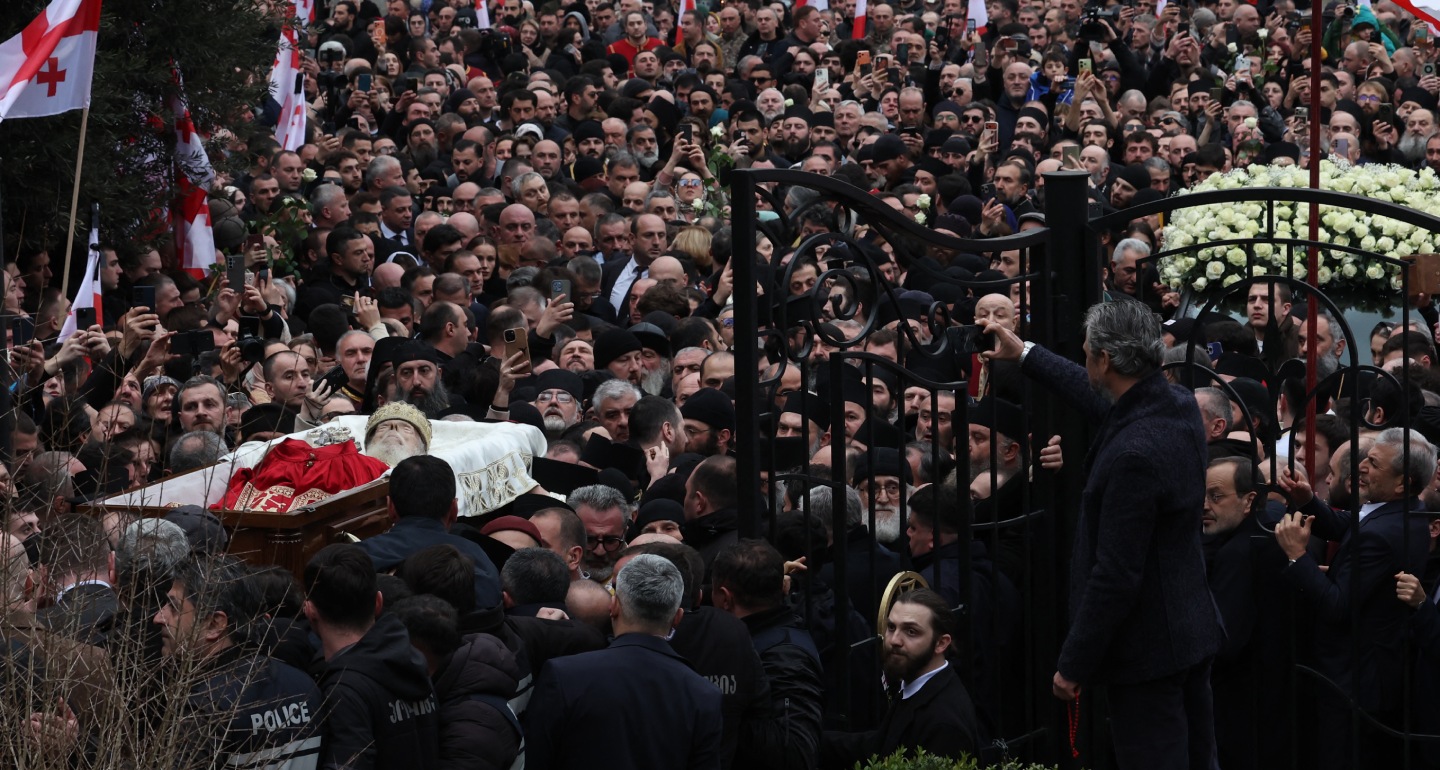
Source: Getty
The front-runner to succeed Ilia II, Metropolitan Shio, is prone to harsh anti-Western rhetoric and frequent criticism of “liberal ideologies” that he claims threaten the Georgian state. This raises fears that under his leadership the Georgian Orthodox Church will lose its unifying role and become an instrument of ultraconservative ideology.
Patriarch Ilia II, who headed the Georgian Orthodox Church (GOC) for almost half a century and was held in higher regard than any politician, has passed away at the age of ninety-three. He will be remembered as a wise church leader who gave his people a sense of stability in times of crisis, empowered the GOC to essentially become a fourth branch of power, and maintained his influence under every administration.
Georgian society, fractured by recent political developments, was temporarily united in mourning the Patriarch. Government officials and opposition politicians alike have spoken kindly about Ilia II, and thousands of Georgians waited in line for many hours to say their goodbyes.
Although the GOC has experienced its share of controversies during Ilia II’s tenure—including accusations of corruption, nepotism, links with the special services, and internal intrigues as extreme as poisoning attempts—the Patriarch and his reputation have remained unscathed. Georgians will remember him as a charismatic, wise, and benevolent man who united Georgian society. Few expect the next Georgian Patriarch to live up to Ilia II’s standard, so his passing is seen as the end of an era.
Ilia II was the longest-serving head of the GOC in history. When he became Patriarch back in 1977, amid Soviet atheist ideology, there were only thirty-four active churches and several dozen priests in Georgia. Today, there are hundreds of churches.
After the collapse of the Soviet Union, Ilia II did everything in his power to fill the ideological vacuum and make the GOC one of the pillars of Georgia’s national identity. In 1990, the Ecumenical Patriarch of Constantinople recognized the autocephaly of the GOC, which formalized the process of its spiritual separation from Moscow.
Despite Ilia II’s achievements in securing autocephaly, some critics have accused him of being pro-Russian. This was largely a consequence of his efforts to maintain a dialogue with the Russian Orthodox Church even in the wake of Russia’s 2008 invasion of Georgia. At one point, the Church was essentially the only remaining channel of communication between Tbilisi and Moscow.
However, both in 2008 and when he later refused to recognize the autocephaly of the Orthodox Church of Ukraine, Ilia II was driven by pragmatism rather than any particular fondness for Russia. His position prevented a tit-for-tat response from the Russian Orthodox Church, which still recognizes the Churches of Georgia’s breakaway regions of South Ossetia and Abkhazia as part of the GOC.
Under Ilia II’s leadership, the GOC was a neutral, supra-political institution that united the country—particularly in times of crisis. At the same time, it grew so powerful that it inevitably affected societal norms and national policymaking.
The special position of the GOC is enshrined in a 2002 constitutional agreement that granted the Church a consultative role in policymaking, along with certain tax exemptions, state financing, and ownership rights to large land lots and other property.
Even regardless of formal obligations, the Georgian authorities could not afford to ignore the views of the GOC. Under Ilia II, the church enjoyed the support of more than 80 percent of Georgians, an approval rating that the country’s politicians and parties could only dream of. The Patriarch, as well as respected local priests, particularly in the regions, held much more sway over voters than political promises and campaigning.
The growing influence of the GOC was particularly visible in the social sector. In 2007, Ilia II, who was very concerned about the population decline in Georgia, promised to personally baptize all third and subsequent children in Georgian families. He thus became the godfather of more than 50,000 children, and a number of parents admitted that this motivated them to have another child.
Ilia II has also consistently championed conservative social positions, speaking out against abortion and LGBTQ+ rights, which has brought the GOC and the ruling Georgian Dream party closer together. The Church supported legislation on “family values and protection of minors,” which rolls back LGBTQ+ rights and introduces media censorship under the guise of protecting “traditional identity.” It also endorsed the 2024 law on “transparency of foreign influence,” agreeing with the government’s narrative that the legislation was necessary to protect national sovereignty from Western NGOs.
Additionally, the GOC has exerted significant influence over the Georgian education system. As part of its 2025–2026 education reform, the Georgian Ministry of Education transitioned to a “one book for all schools” system for textbooks. Critics believe that this system reflects the desire of the Church and the government to make sure that the textbooks are in line with religious dogma. Previously, the Patriarchate openly objected to references in foreign textbooks to families with same-sex parents.
The new Patriarch will be elected by an Extended Council that includes members of the clergy and the laity; however, there is already a clear front-runner: Metropolitan Shio Mujiri. In 2017, Ilia II, citing declining health, appointed Shio as his locum tenens. Western-minded Georgians have many concerns about Shio’s background and leanings.
Shio Mujiri studied in Russia, graduating from Saint Tikhon’s Orthodox University for the Humanities, and served in Moscow for many years. He is widely regarded as a radical conservative and a proponent of closer ties with the Russian Orthodox Church. Unlike the diplomatic Ilia II, Shio is prone to harsh anti-Western rhetoric and frequent criticism of “liberal ideologies” that he claims threaten the Georgian state. He is considered the favorite of Georgian Dream, which is said to view him as a “predictable” and “understandable” figure.
Ilia II was known for his ability to maintain a balance among diverse groups, but Shio has not proven himself to have this aptitude, at least to date. This raises fears that under his leadership the GOC will lose its unifying role, get involved in political conflicts, and become an instrument of ultraconservative ideology.
Yet there appear to be no progressive alternatives to Shio. His main rival, Metropolitan Iobi, does criticize the government, but only for not being conservative enough.
Whoever does become the new Patriarch will have access to great power and influence in Georgia. But the GOC, a “state within a state,” will no longer have at its helm a figure who commands the high level of public trust enjoyed by Patriarch Ilia II.

Bashir Kitachaev
Journalist specializing on the South Caucasus region
Recent Work
Bashir Kitachaev
Bashir Kitachaev
Carnegie does not take institutional positions on public policy issues; the views represented herein are those of the author(s) and do not necessarily reflect the views of Carnegie, its staff, or its trustees.
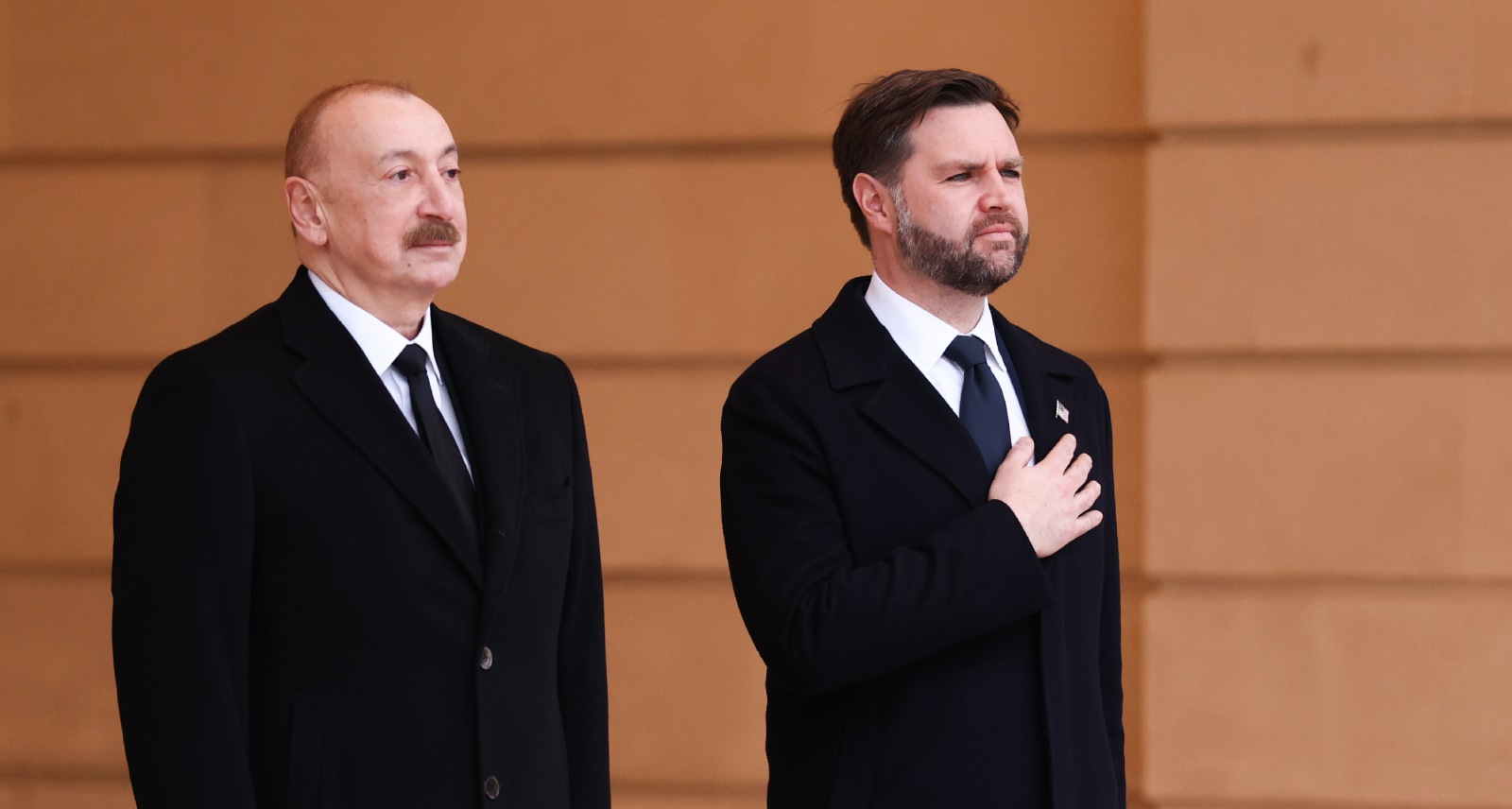
With the White House only interested in economic dealmaking, Georgia finds itself eclipsed by what Armenia and Azerbaijan can offer.
Bashir Kitachaev
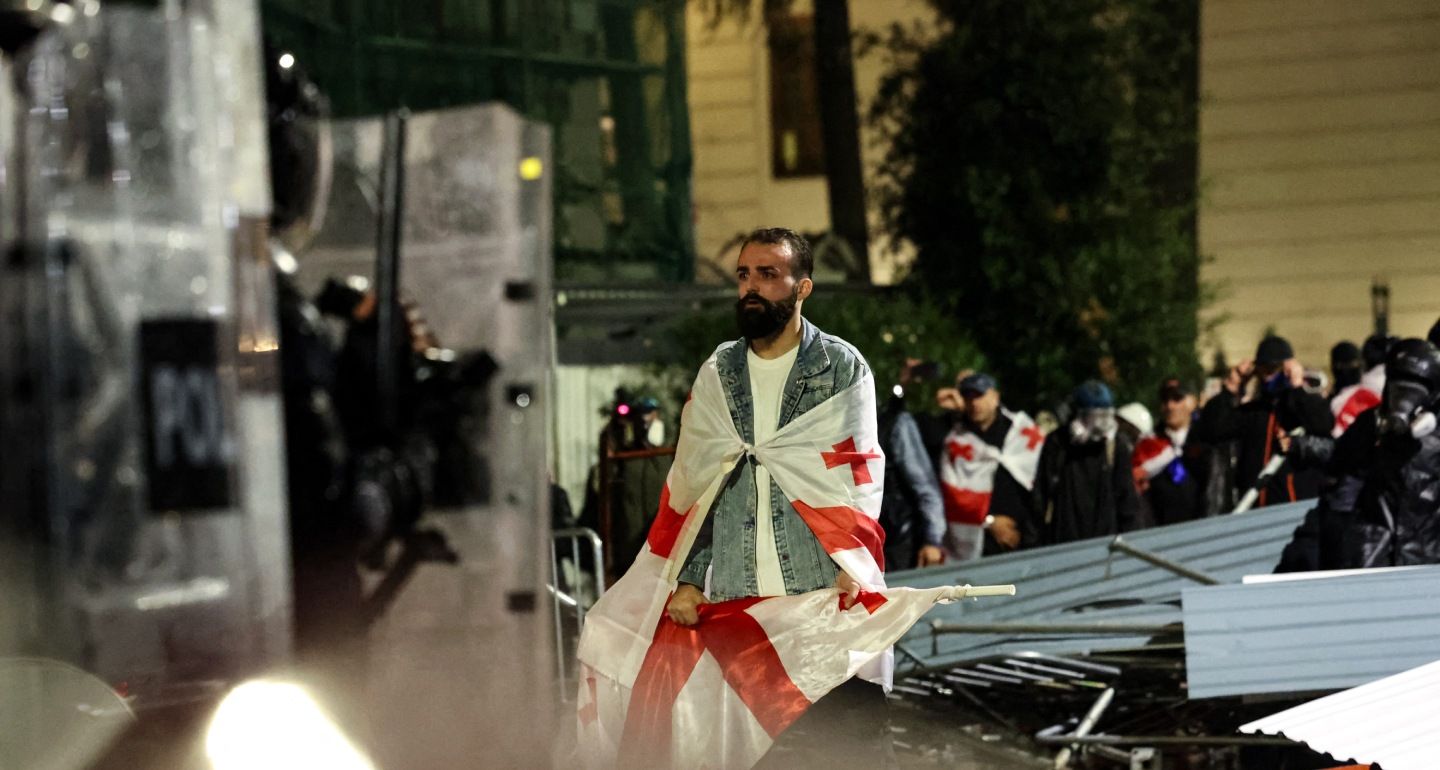
Georgian Dream may continue along the path of “managed democracy” and growing pressure on the opposition and civil society. But this model of authoritarianism will still leave room for destabilization and a rollback to a more liberal political climate.
Bashir Kitachaev
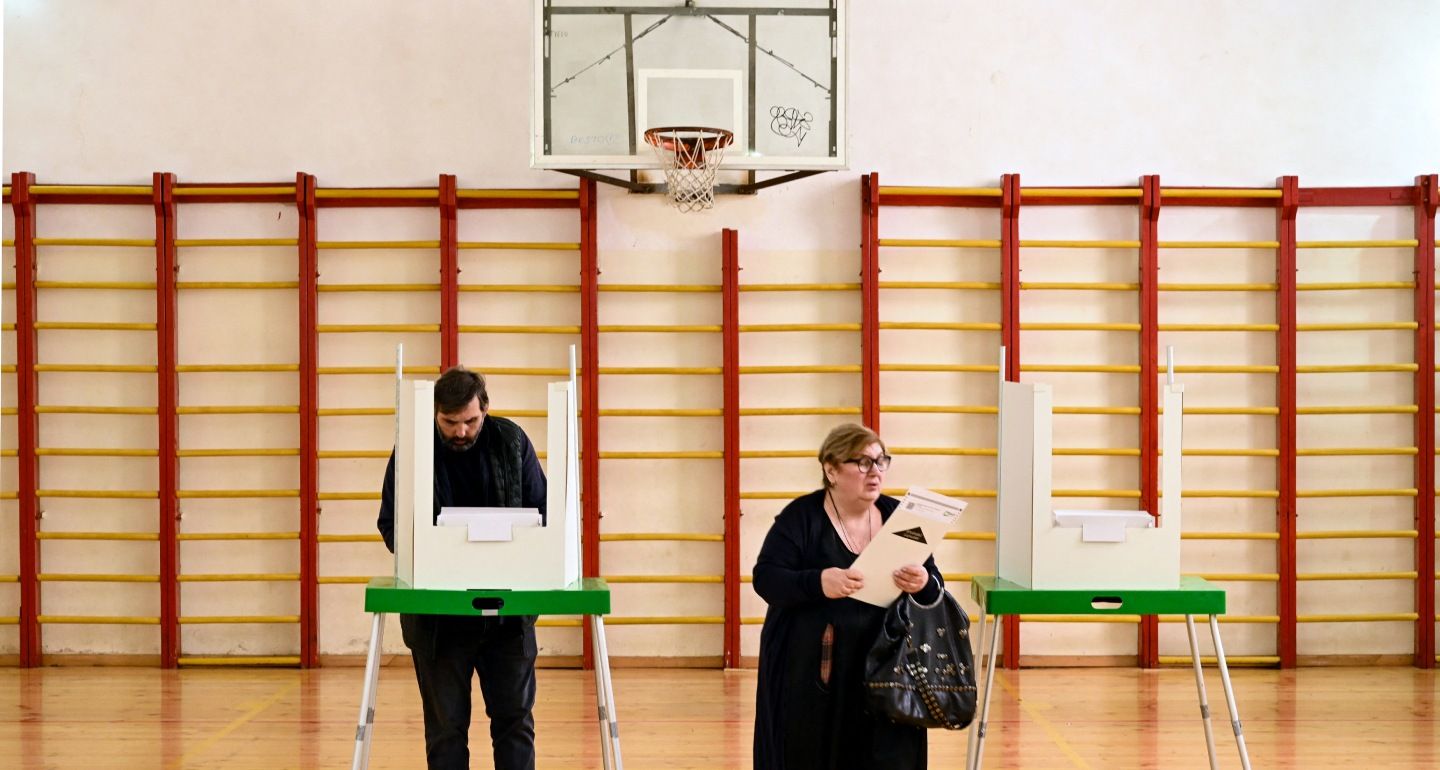
Amid an economic boom, rhetoric about curtailing civil liberties is proving insufficient to galvanize Georgians into large-scale protests.
Bashir Kitachaev
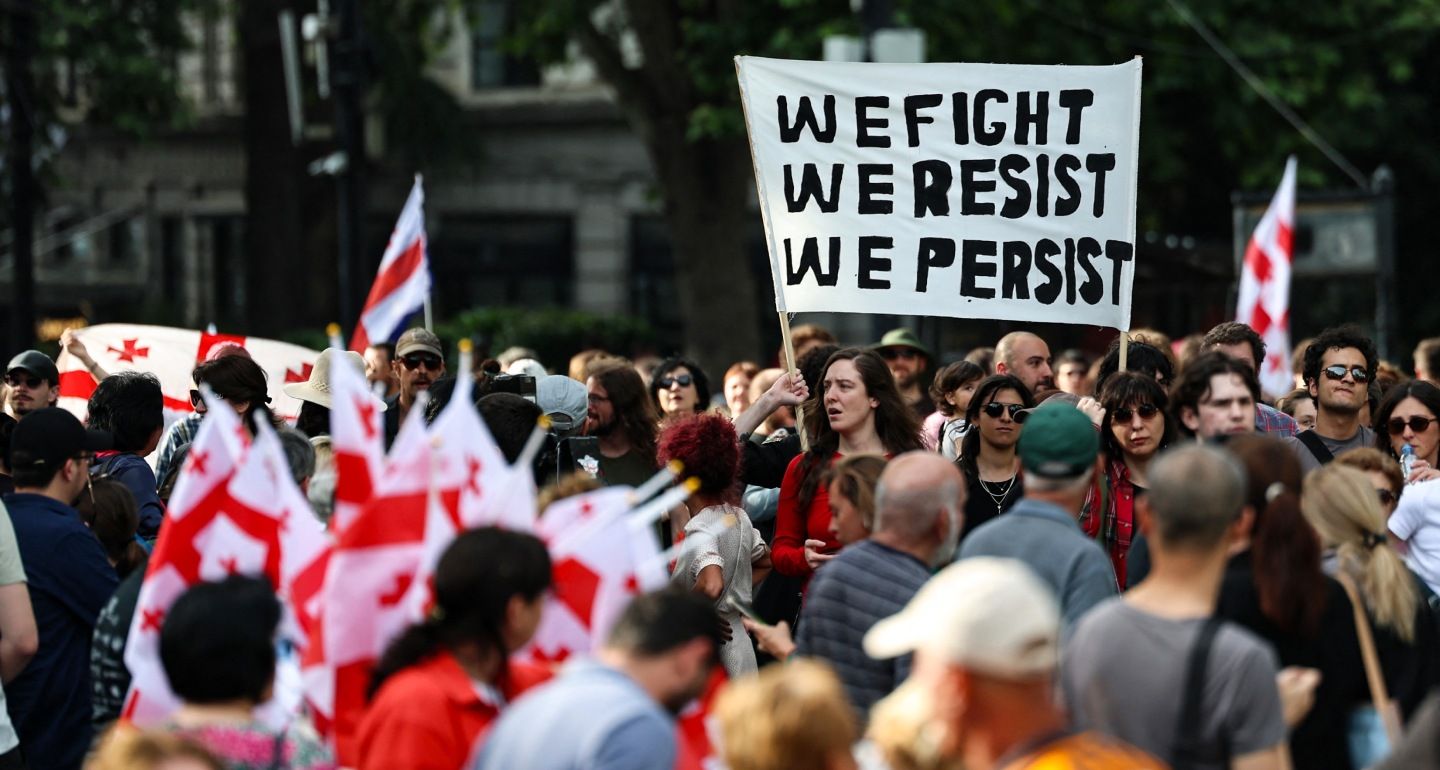
The Georgian opposition’s internal conflicts, as well as its strategy of boycotting all elections, risks leaving a dangerous vacuum.
Bashir Kitachaev
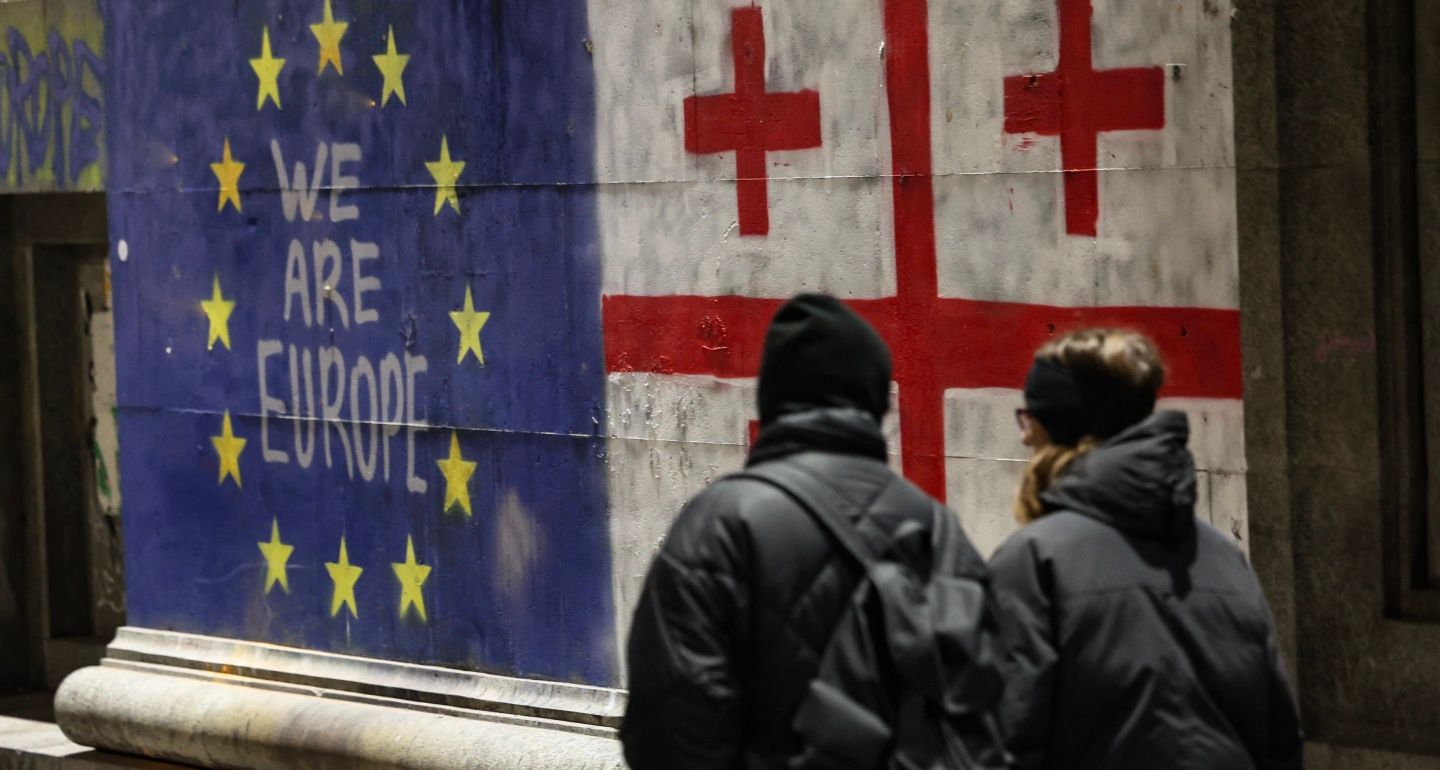
The “low-hanging fruit” of closer ties with the EU have already been granted to Georgia, while full membership is hardly imminently possible. As a result, the Georgian government can afford to prioritize a bid to strengthen its domestic authority over standards proclaimed from Brussels.
Bashir Kitachaev